Japanese Pick Up Lines: Flirty Phrases That Actually Work in Japan

Olivia Hensley
Published Jul 17, 2026
Most people think flirting is universal. Say something bold, smile, wait for the reaction. But land in Tokyo or Osaka and try that approach, and you might walk away confused. Japanese pick up lines are a world of their own - shaped by centuries of social customs, deep respect for personal space, and a cultural preference for saying less to mean more. Whether you are learning Japanese for travel, dating, or pure curiosity, understanding how romance works in Japan starts with understanding the language behind it.
Why Japanese Flirting Is Different
Japanese pick up culture is a little more lowkey than that of the western world. Many Japanese people are more reserved with their feelings and mindful of their approach towards other people. Things like public displays of affection are not as common, and Japanese people can be a bit shy when initiating romance with someone new. This is not timidity - it is etiquette.
Flirting in Japan often relies on subtlety and non-verbal cues rather than overt gestures. Japanese culture places a strong emphasis on modesty and indirect communication, so flirting typically involves playful teasing, gentle body language, and meaningful eye contact. A well-placed glance can communicate what a bold line might ruin.
In Japan, thoughtfulness (気遣い, kizukai) and caring behavior (思いやりのある行動, omoiyari no aru kodo) are much preferred over very amorous words in romantic relationships. Understanding this single principle changes everything about how you choose and deliver a Japanese pick up line.
The Social Scene: Where Japanese Pick Up Lines Get Used
Pick-up lines don't have deep roots in Japanese dating culture. For instance, pickup lines are often encountered in nanpa - the Japanese slang term for picking up strangers on the street. Nanpa is mostly a big-city phenomenon, most visible in areas like Shibuya or Shinjuku, and it is far more casual in execution than its Western equivalent.
There are a few things in Japanese culture which help people be more comfortable in getting to know others or finding that someone special. For example, there are events called goukon (合コン) which is essentially a mixer. A goukon is generally held in a restaurant or pub as alcohol is usually involved - helping the participants to loosen up. These organized group settings take the awkward spotlight off individual approaches and give everyone room to warm up naturally.
There is no Japanese word that exactly matches the English word "flirting." It is typically translated as イチャイチャする (ichaicha suru - flirting), 口説く (kudoku - to seduce), or ナンパする (nanpa suru - to pick up someone). Each word carries slightly different social weight, and context matters enormously.
Starting the Conversation: Japanese Pick Up Lines for Beginners
The first move in Japan rarely involves a flashy one-liner. It is more of a quiet door-knock than a grand entrance. Chotto ii desu ka (ちょっといいですか) is a great opener to see if the person you are pursuing is even interested in listening to what you have to say. It translates roughly to "Is this a good time?" - respectful, non-invasive, and easy to respond to without awkwardness.
For your first contact with someone, using the formal form would be nice - it will give them the impression that you're a polite and decent person. First impressions in Japan carry real weight, and jumping straight into casual speech can signal the wrong thing entirely.
Once you have that initial green light, compliments work beautifully. Compliments make for some of the best pick-up lines. Great compliments in Japanese can flatter your crush and help you land a date, all while genuinely expressing your admiration for them. The key is keeping it sincere rather than scripted.
The Best Japanese Pick Up Lines to Know
Here is a practical breakdown of Japanese pick up lines that range from smooth and subtle to cheerfully cheesy - organized by tone and setting.
Sweet and Complimentary Lines
Kawaii (可愛い) is an extremely commonly used word in Japanese, and kawaii culture is a huge thing in Japan. In English-speaking cultures, being called "cute" may not be exactly what a woman wants to hear - but in Japan, kawaii is definitely a flattering term. Saying かわいいね (kawaii ne) - "you're so cute" - lands warmly in almost any casual context.
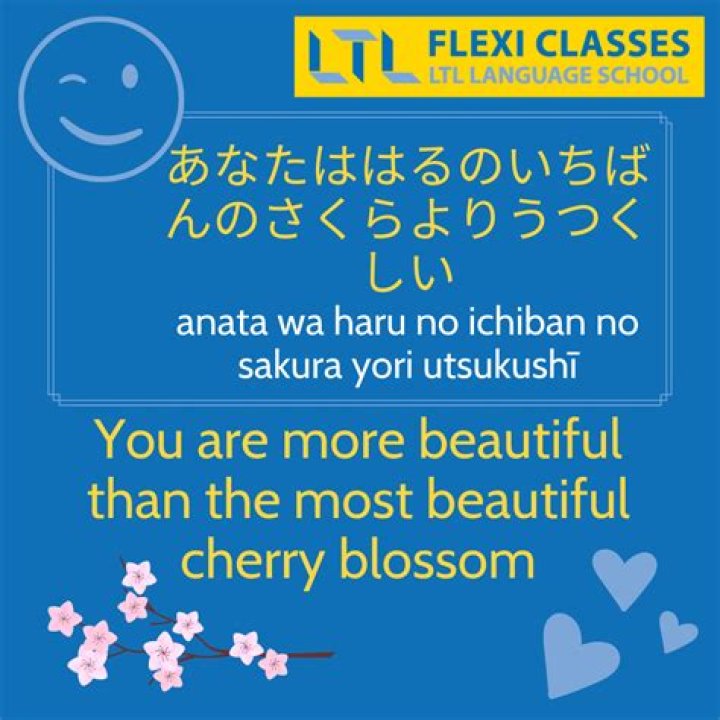
For something with more romantic weight, kirei (綺麗) is a little more intense than saying kawaii. You can use the phrase anata wa hana yori kirei (あなたは花より綺麗), which means "you are more beautiful than a flower." That one does not need much embellishment - it speaks for itself.
かっこいいね (Kakkoii ne) means "You're so cool or handsome." This is a common compliment for men, since it expresses something like "cool" or "handsome." You can even use the word platonically for friends, but it works well when you want to express admiration for a crush.
The Subtle Date Invitation
One of the most well-known pick up lines in Japanese is ocha shinai (お茶しない). It directly translates to "let's go for tea," though the nuance is more like "let's go on a date." It doesn't necessarily have to be tea - it just means you are setting a plan in motion to meet again and see what romance may blossom.
There might be times when the best pick-up line is just to ask someone to hang out without bringing up any specific plan. In Japanese, it is common to use the word 遊ぶ (asobu), which literally translates to "to play," but it doesn't carry a childish connotation - it expresses something closer to "to hang out." Asking 土曜日に遊びに行かないの?(Doyoubi ni asobi ni ikanai no? - "Want to hang out this Saturday?") is low-pressure and genuinely natural.
Instead of a big confession, try もしよかったら、今度ご飯でも (moshi yokattara, kondo gohan demo - "if you'd like, maybe a meal sometime"). The softener もしよかったら lets the other person decline easily, which Japanese culture values deeply. It gives them an exit without embarrassment - something considered genuinely considerate.
The Poetic Pick Up Line - Japan's Most Romantic Phrase
No discussion of Japanese pick up lines is complete without this one. One of the most popular romantic lines you can say in Japanese is 月がきれいですね (Tsuki ga kirei desu ne) - "The moon is so beautiful." This phrase is actually a classic way of saying "I love you" in Japanese. The expression is attributed to Meiji-era novelist Natsume Soseki, who reportedly felt that a direct translation of "I love you" sounded unnatural in Japanese. His suggested alternative leaned on poetic indirection - much more in keeping with how emotions are expressed in Japan.
In Japanese, indirectness is often valued more, even for something like pick-up lines. More subtle expressions can communicate even more emotion than being overtly direct about how you feel. It also puts less pressure on the listener. That is the secret architecture of Japanese romance - suggestion carries more power than declaration.
Asking for Contact Details
If your opener lands well, the natural next step is getting connected. LINE交換しない?(LINE koukan shinai? - "want to swap LINE?") is the standard, low-key move. LINE is the main messaging app in Japan, so asking to exchange it is the modern equivalent of asking for a number - and it feels casual rather than intense.
Renrakusaki (連絡先) simply means "contact details," which can be anything from phone number to email address. These days, most people use social media or messaging apps to keep in contact. In Japan, the majority of people use the messaging app LINE, so if you are on the Japanese dating scene, make sure to download it.
Levels of Love: How Japanese Expresses Affection
One thing that surprises many learners is that Japanese has a layered vocabulary for expressing romantic feelings. It is not a single "I love you" - the language has gradations, and using the wrong one too soon can come across as strange or even alarming.
すきです (suki desu) can mean "like" or "love." だいすきです (daisuki desu) is closer to "love" but still literally means "like a lot." あいしてる (aishiteru) means "I love you" and uses the verb "to love" in Japanese. It's pretty deep and intense.
Although "aishiteru" means "I love you," it is a bit too heavy to start with. The Japanese use "suki" (to like) or "daisuki" (to like very much) even for serious declarations of love. "Aishiteru" is saved for romantic dramas or when you have been in a relationship for years. Rushing to that word too early sends the wrong signal entirely.
Funny and Cheesy Japanese Pick Up Lines (English-Style)
Beyond traditional Japanese phrases, there is a whole genre of Japan-themed pick up lines that play on cultural imagery - written in English but inspired by Japanese references. These work well as icebreakers in casual settings, especially online or among friends who appreciate a good groan-worthy pun.
Lines like "Are you sakura? Because you just made my heart bloom," or "You must be a Shinkansen, because you rushed straight into my heart" combine Japan's iconic symbols with classic pick-up-line structure. One example plays on Japanese food culture: "You're like sushi - I'm completely wrapped up in your charm!" This line uses a metaphor that's both playful and relatable.
Japanese pick-up lines blend charm with a touch of humor, reflecting the culture's appreciation for wit and subtlety. One popular line is あなたは僕の運命の人ですか?(Anata wa boku no unmei no hito desu ka?), which translates to "Are you my destined person?" This line not only expresses interest but also carries a romantic weight, inviting the listener to ponder their own feelings.
Cultural Rules You Should Not Ignore
In any culture, it is pretty easy to offend when using cheesy pick up lines - but Japanese culture has a lot of rules and it is pretty easy to get things wrong. A few ground rules help you avoid crossing a line you cannot uncross.
Japanese love phrases are usually mild in comparison to very sweeping romantic statements. People could view you as a player or a sleazy flirt if you use such artificial romantic words in Japan. Sincerity, not drama, is what resonates.
The Japanese value their personal space highly. There is no need to constantly touch someone's arm or shoulder. Sometimes, a glance held for a second longer than usual speaks louder than a thousand words.
If there is a pause in the conversation, do not get nervous. In Japan, sharing a comfortable silence is a sign that there is a connection. Filling every silence with words is a Western impulse that does not always translate well.
Flirting only works when interest is mutual - read the response and back off gracefully if it is not there. That applies everywhere, of course, but in Japan, a polite non-response often is the response. Learn to read it.
Quick Reference: Key Japanese Pick Up Lines and Phrases
| Japanese (Romaji) | Kanji / Kana | Meaning / Use |
|---|---|---|
| Ocha shinai? | お茶しない? | Want to go on a date? |
| Kawaii ne | 可愛いね | You're so cute |
| Anata wa hana yori kirei | あなたは花より綺麗 | You're more beautiful than a flower |
| Tsuki ga kirei desu ne | 月がきれいですね | The moon is beautiful (= I love you) |
| LINE koukan shinai? | LINE交換しない? | Want to swap LINE contacts? |
| Suki da yo | 好きだよ | I like / love you |
| Moshi yokattara, gohan demo | もしよかったら、ご飯でも | If you'd like, maybe a meal sometime? |
Final Thoughts on Japanese Pick Up Lines
Japanese pick up lines reward patience, observation, and genuine care. The phrases above range from classic compliments to poetic declarations, but the most effective romantic gesture in Japan is often the quietest one - a warm smile, a low-pressure invitation, or a well-timed mention of the moon. Flirting in Japanese is usually a quiet art, not a bold opener. The smoothest moves are casual invitations and small compliments - and knowing the difference between charming and cringe is half the battle.
Whether you are practicing for a trip to Japan, building a relationship with someone Japanese, or simply expanding your language skills, these phrases give you a solid, culturally grounded starting point. Use them with sincerity, read the room carefully, and let the connection build at its own pace. In Japan, slow and steady does not just win the race - it is the whole point.
